

This guide explains what search engine optimization is, how search engines crawl, index, and rank pages, and what quality content looks like. You do not need homework, but a marketing plan still helps, because a useful SEO service uses the same facts you already collected about who you serve.
We wrote this so you can judge SEO work for yourself, see how it fits with other marketing, and stay away from the digital version of snake oil salesmen.
Contents
- What search engine optimization really means
- How search engines produce results
- How crawling spiders read your site
- How indexing stores your pages
- How ranking decides who shows up
- What quality content actually means
- More ways to raise content quality
- SEO questions we hear most
What search engine optimization really means
Search Engine Optimization basically means modifying your website to allow search engines to make the best possible matches between what you sell and searchers who want what you sell. If you’re surprised that we didn’t say anything about ranking number one, you’re not alone, and you’re not entirely wrong if you think ranking is important. But here’s the thing - the internet is like a huge library. Imagine going into a Costco sized building with rows and rows of books on every shelf. You want a book about decorating cakes for a kid’s birthday party. You don’t really care what the most popular book in the library is. You don’t really care what the most popular book about cooking is. You don’t even care about the most popular book about baking cakes. What you want is exactly what you said you want - a book about decorating cakes for a kid’s birthday party.
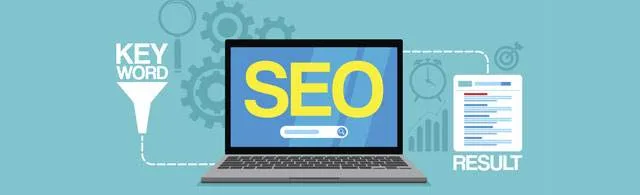
When we put this example into virtual space, where there are more than four billion web pages, IF your website (or a page within it) is about decorating cakes for a kid’s birthday party, THEN yes, you want to rank #1. If your site is about anything else, it doesn’t really matter where you rank, because the person searching doesn’t care.
How search engines produce results
Google is the most popular search engine out there and they offer great resources for developers and marketers, so we’re going to use Google as our search engine example.
Google uses a three step process to figure out what your website is all about, how to categorize it, and how to match it. Google has an army of computers that visit every page on the internet on a regular basis. They call this “crawling” the web. By comparing what they (the computers) found the last time they completed a round a visits to their current round, they know which pages are new, which have disappeared, and which have changed.
The words found by the crawlers are then “indexed” by page address and location on the page.

When a user types a word or phrase, the Google computers look at all of the content in the index, and using more than 200 factors, determines which pages are the most relevant and valuable to the user. The exact nature of those factors and how they weight in the calculations are known only to Google. What we do know, and what Google stresses to web developers and site owners, is that what they care about most is providing authentic, helpful information to site visitors.
How crawling spiders read your site
First, a little lingo lesson. A “bot” is a computer program that, once put into action, runs automatically. The internet is often referred to as “the web” because it functions much like a spider’s web, with many different ways to connect between two specific points.
Google uses a bot (aptly named “Googlebot”) to crawl the web. This type of bot, also used by other search engines, are also referred to as spiders. Got it?
Googlebot crawls through the web looking for things that have changed. It wants to find new pages, new links, as well as deleted content and dead links. Links in and out of web pages are particularly important to search engines, so dead links are a sign that something is wrong, and therefore is going to be a problem for users - and therefore, this info will ultimately weight negatively when compiling search results. Maintaining logical links (like within a site) as well as high quality incoming links (like from reputable directories) is a key process in SEO.
Since search engines are text based, Googlebot and other spiders can only read text based content. That means that they do not know what images represent unless they are appropriately described in what is called “alt text.” This also makes it particularly important to use a text based navigation system rather than something fancier, however visually appealing.
Spider accessibility is also determined by the speed with which the site is deployed by the hosting server when requested. Googlebot won’t hang around waiting (and neither will your potential customers).
Keeping your website clean, readable, and readily available to those spiders is essential to getting your site’s content indexed and presented in results.
How indexing stores your pages
If you go to the back pages of a reference book, you’ll find a list of key words and which page of the book those key words are on. This is called an index, and while tremendously more sophisticated, Google’s index is a digital version of this concept.
The crawlers (see Part 3) look at the words on a webpage and send them to the Google index, along with other data, such as where the word is on the page, whether the word is part of a title, or in the description of an image (called “alternative text” or an “alt tag”).
The index of words is obviously important in matching a web page to the word or phrase that is being searched, but it is only one of many factors considered in the ranking. For example, if you type in “plumbers” in the search box, Google goes to the index to find all of the web pages that have the word “plumbers.” So, if you have that word on your web page, Google knows it’s a match. But how good a match?

Google understands that you are not actually looking for the word plumbers, but rather, are looking for a plumber, in a specific location, that you can call to repair a broken water pipe or install a new bathroom sink. So in that indexing process, Google is also looking for words or phrases related to “plumbers,” like “broken water pipe” or “new bathroom sink.” They are also looking for a web page that has a location, a phone number, and maybe a paragraph about what to do if a water pipe breaks.
The bottom line is that while words are important, it’s never one specific word no matter how many times you repeat it that is going to get you on the first page of search results.
How ranking decides who shows up
If you’ve done any research on search engine optimization, you’ve no doubt seen the word “algorithm” as part of an explanation about how search engines prioritize or rank results. So what is an algorithm?
It can take many forms, but an algorithm is basically a formula or step by step process. For example, a mathematical algorithm tells you how to solve a mathematical problem. It tells you what action to do first, what to next, etc. until you have the answer. A cooking recipe is also an algorithm. It tells you what actions to take to result in a batch of muffins.
Google uses not one, but many algorithms to determine the ranking of web sites in response to a search, deciding which one is at the top of the first page, and all the way to page 10 and beyond. While no one knows exactly what those algorithms are, we can give you a fictitious and simplistic example just for understanding’s sake.
You type in “dog walkers” in hope of finding an experienced and reputable person to go into your apartment mid-day and take Fido out for a walk and bathroom break.
Google searches its index and finds all the web pages with “dog” and all the web pages with “walkers.”
Algorithm #1 knocks out all the pages that have “dog” but not “walker” and vice versa. Its job is to get you the right information, not just match the two words, giving you a confusing list of results about dog breeding and devices to help seniors walk without tripping.
Algorithm #2 looks at where the phrase “dog walker” appears on the shorter list of web pages. Is it part of the URL, as in www.abbotsforddogwalker.com? Is it in a page title, like “Our Dog Walkers’ Qualifications?” Does it appear only in the text? Let’s say this narrows the list down to only pages where the term appears in all three locations.

Algorithm #3 takes a different perspective all together, and looks at information it has about the searcher. It knows that the searcher is in Vancouver, and likely knows the neighbourhood too. It also knows that yesterday, the searcher was looking for rain gear for large dogs. Since our list has 125 pages for dog walker in Vancouver, it drops all the rest. Of those 125, four specifically mention large dogs. Those go to the top of list.
And on it goes, looking at hundreds of factors, identifying and dropping spamming sites, raising the ranking of sites with high quality content (more on that next time), and the ones that are linked from other relevant and quality web sites (e.g. a local dog association or the SPCA).
All of that to say, you can’t get to the top of the results list with words alone.
What quality content actually means
Quality content is important for a number of reasons, including search engine optimization. But what exactly is it? Here are x of the main factors that will result in quality content.
Expected Basics: The 5 W’s are the place to start. Who are you? What do you sell or provide? When are you reachable? Where are you located? Why should I contact you? Your potential customers need this information to know if you can help them, and it helps to builds credibility.
Relevant and Concise: The user’s perspective is critical here. What does a potential customer really want to know? If you are a professional service provider, they may want to know your credentials. They don’t likely want to read through your entire life history to find that info.

Informative: Your website is a great place to educate your target market, but don’t turn it into one of those late-night infomercials. Share knowledge of your products or services. Provide tips relevant to your industry. Go deep into particular aspects, materials, or jargon. Basically, be a resource for those who want to learn more. Keep this content separate though, in articles or a blog, so those who are looking for just the basics can find that easily.
Original: If you think you’re getting a deal paying a pittance for content for your website, think again. The reason you’re paying such a low price is that the same content, and often the exact same wording, is being sold over and over again. Originality counts in SEO ranking and to your site viewers. Make sure it is tailored to your brand voice, to your target audience, and to your products or services.

Flawless: Make sure that there are no spelling or grammatical errors; that the narrative flows in a logical manner; that image captions are correct; and that all links are active and go to the proper place.
More ways to raise content quality
Another way to think about quality content is creating a site to meet your customers’ needs. While you can’t anticipate what an individual customer might be looking for, you can make it easier to find any specific thing on your site, with these considerations.
Simple Navigation: Creating an appropriate navigation system is like sorting laundry. You look at all the items you want to include, and then sort them in to logical categories. Use plain words to describe each category, avoiding those confounding icons or cutesy sayings that have led you into the wrong restaurant bathroom more than once.
Descriptive Page Names, Titles and Headings: If you have a page for Blue Sweaters, call the page Blue Sweaters, use the title Blue Sweaters, and create content headings using Blue Sweaters; e.g. Blue Sweaters - Cotton. This ensures that the humans and the bots find the Blue Sweaters.
Accurate Product/Service Descriptions: Returns and unsatisfied customers are the bane of every business and can massively harm your reputation. Provide all necessary descriptors accurately. Remember that sizes are useless without a sizing chart, and these can differ by brand.

Consistent Information: This seems like a no-brainer, but far too many websites confuse customers by saying one thing on one page, and something seemingly different on the next. This can happen inadvertently when you are updating content, so always be sure to review the entire site again, even if you only change one page.
Appropriate Jargon: Use terminology suited to your target audience. If they understand the industry jargon, use it. If they don’t, but it’s important, explain it. If they don’t know or care, use plain language.

You can create quality content for your own website, but it can be hard to swivel your brain to the outsider’s perspective. Hiring a professional is well worth it, and we happen to have one our team! Give us a call for more information.
SEO questions we hear most
We’re wrapping up this article series with a few frequently asked questions about Search Engine Optimization, and moving on to another topic. What would you like to learn more about? Send us your questions and suggestions on anything to do with Internet Advertising! Now, FAQs.
Do I need a blog for SEO? No, but a regular blog with relevant content that is valuable to your audience will help your ranking because it is viewed as new, quality content on your site. If you can’t commit though to a specific schedule and consistent high quality info, don’t start a blog.
If I get a high ranking, do I still need to advertise? If you want to attract new customers, yes. Even if you appear on the first page of search results, that only happens when someone searches for one of your keywords. To attract new audiences, find customers for a new product or service, or develop a new market, you need to advertise.

Do I really need to hire a professional SEO writer? You do need a writer who knows how to produce quality, SEO content. If you have one in-house, that’s great. If you have an employee who is a great writer but has no experience with SEO content, Google has some great resources, but it will take time for them to learn. Also, remember that the text is only one part of the SEO formula. (See previous articles in this series for more.)
Why does SEO work go on and on? Because the internet is ever changing - like every second of the day. Sites you have links to or from may go offline. Updates to browsers can conflict with code on your site. Terminology changes, so user search terms change. New competitors spring up. The popularity of a product or service changes. Maintaining a top ranking is a continuous process.

Do you have more questions? Would you like to know more about our SEO packages?

Meet Nick!
Give him a call at 604-556-0211 or email [email protected]
 Blog
Updating Your Marketing - Part 2: SEO
Updating Your Marketing - Part 2: SEO Search engine optimization (SEO) is an important marketing process that needs to be kept up to date. Your chances of attracting customers increase as your ranking in search engines rises, meaning that if you haven’t updated your SEO lately, it’s time for you to get in touch with […
Read article → Blog
Optimize Your Visuals: Mastering Image and Video SEO
Optimize Your Visuals: Mastering Image and Video SEO Today’s businesses must understand the power of visual content in SEO. This article explains key strategies for using images and videos to improve your website’s search rankings. We’ll cover how to choose the right image formats, reduce file sizes, and write effecti…
Read article → Blog
BERT & NLP: Transforming SEO for Businesses
BERT & NLP: Transforming SEO for Businesses The advent of BERT (Bidirectional Encoder Representations from Transformers) and Natural Language Processing (NLP) has revolutionized Search Engine Optimization (SEO). This article looks into the transformative impact of BERT and NLP on SEO strategies, offering a comprehensi…
Read article →