
Why SEO matters
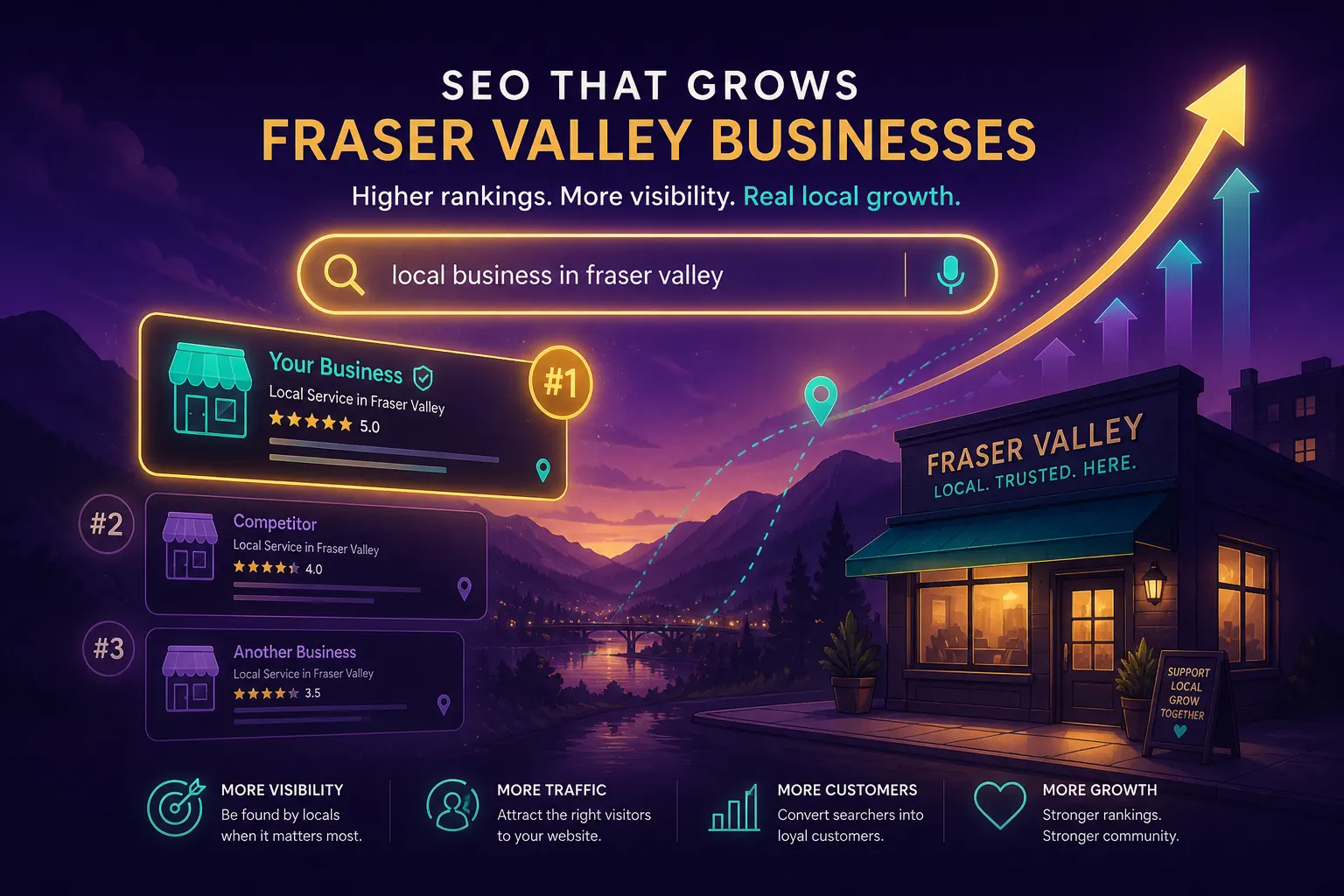
Having your business website appear in the top results on Google is the shortest path to long-term revenue. The method of increasing your website’s rankings in search engines, which brings more visitors to your website, is known as Search Engine Optimization (SEO).
Search engine optimization is extremely important and has a very high return on investment for most businesses.
Google is the first place most people search whenever they need something or have a problem to fix. That’s why ranking your business organically (not via paid ads) on Google’s search engine results pages (SERPs) is so important. It’s arguably the most important marketing strategy for your business.
What are search engines?
Search engines, like Google, Bing, and Duck Duck Go, are software systems that review and organize information on the world wide web. Their goal is to point searchers to the most relevant and helpful pages in response to the user’s search query.
To accomplish this, search engines are programmed with algorithms - complex sorting and valuing instructions that are applied to websites, pages, and content. These algorithms are composed of many, many factors with a lot of conditional formulas; e.g., “if this, check that.”
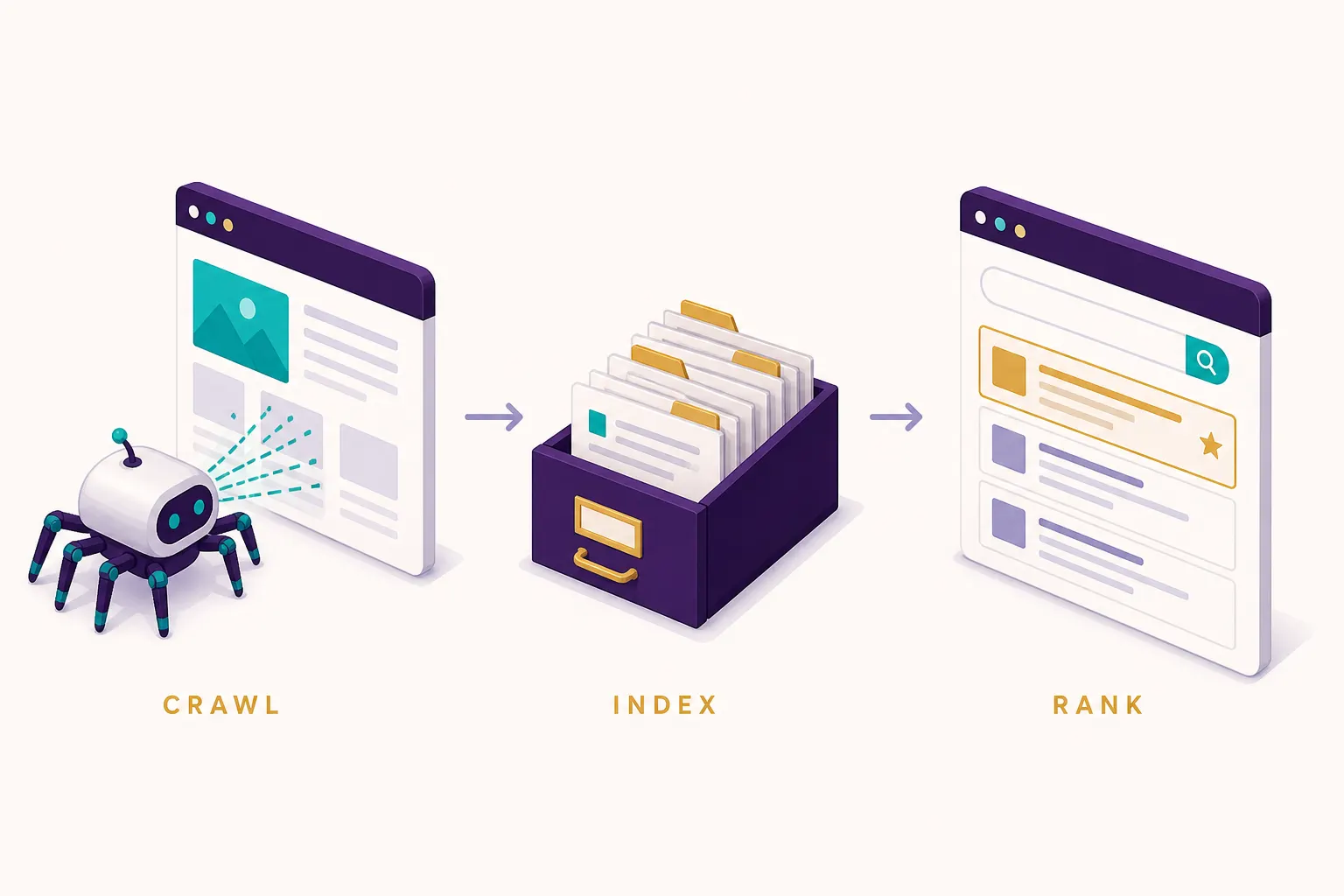
Crawl
Bots follow links and read pages so the search engine knows what exists.
Index
That information is organized, like a giant, constantly updated catalog.
Rank
When someone searches, the engine matches intent to the most helpful pages.
One of the reasons for the complexity of these algorithms is that search engines want to match the searcher’s intent with the results. For example, there are millions of websites that mention “leaky faucet” but what is the context or search intent? Are these sites plumbing businesses, how-to videos, or e-commerce sites selling new faucets?
So, using the same example, if the search phrase is “someone to fix a leaky faucet,” the results will show plumbers and maybe handymen, but won’t show do-it-yourself videos.
All major search engines have their own algorithms determining where to rank a website. They’re basically trying to find the most “popular” website relevant in content and context to the search phrase to suggest to their users. One factor, for example, is the number of times the site is referenced by other sources on the internet. The more references, the more valuable it is considered to be by the search engines.
What is keyword research?
Keyword research is the analytical process of matching a description of what a business has to offer with the words or phrases that your potential customers commonly use to locate that offering. While anyone can do it, it’s not as easy as it might sound, and it is also very time consuming.
One of the reasons for this is that there isn’t much on the internet that is totally unique. With so many other pages mentioning the same offerings you have, you need to really understand your target market, your competitors, and how search engine algorithms work.
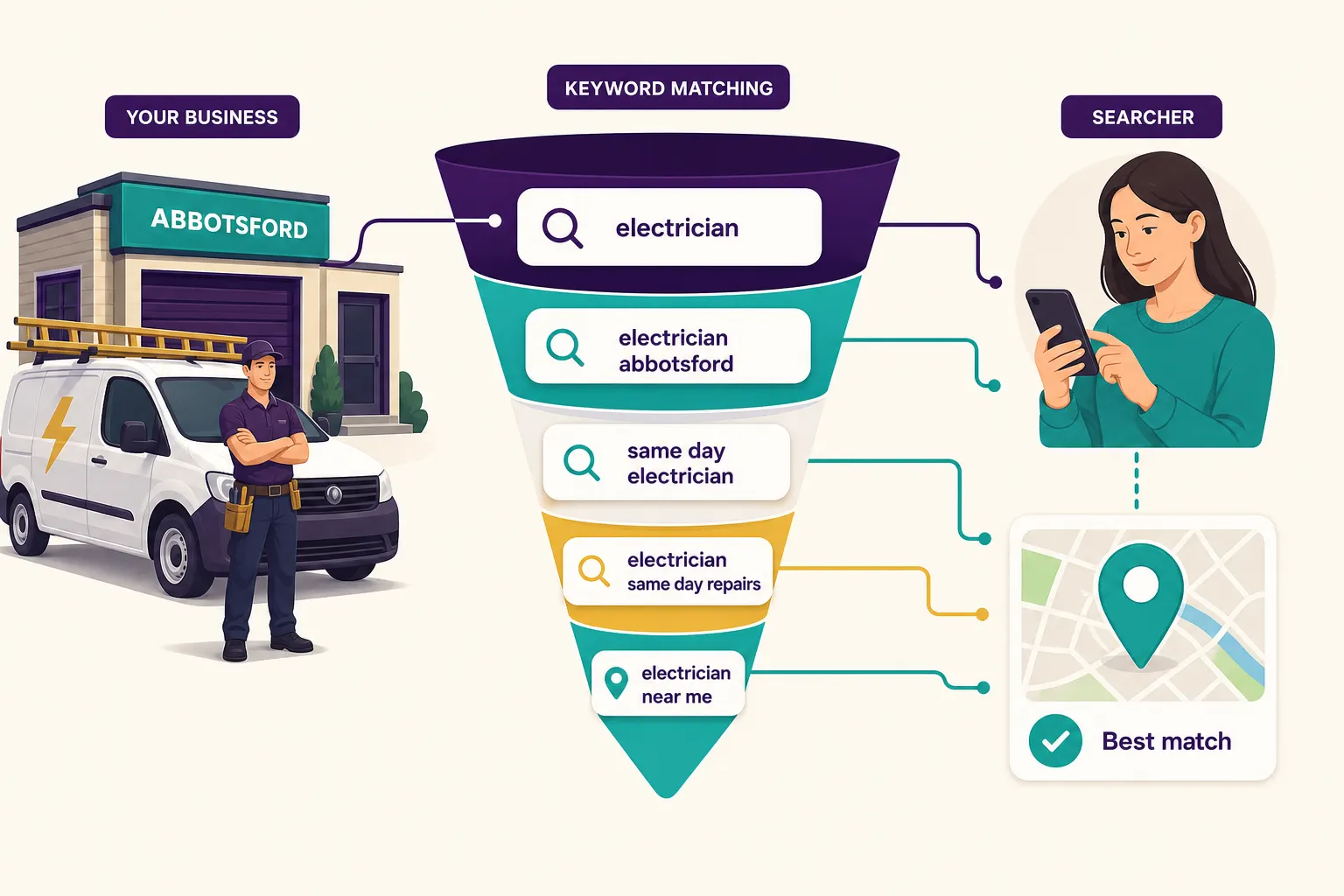
There are tools that keep track of search terms and how frequently they are used, but the most frequent search phrase isn’t always the best one for you, not without modification at least. The word “electrician” is a high volume search term, but using that term alone puts your site in competition with every site in the world that also uses that term. You need to combine the word electrician with other terms that will help Google focus on your relevance to the searcher’s intent. Expanding the search terms and checking the volume of those searches within your target market, allows you to get more specific, which allows Google to make the appropriate matches.
Once you’ve found the best phrases, you’ll need to determine which content and on-page optimization strategies are best for them.
The basic two factors of optimizing a website for Google
Factor 1
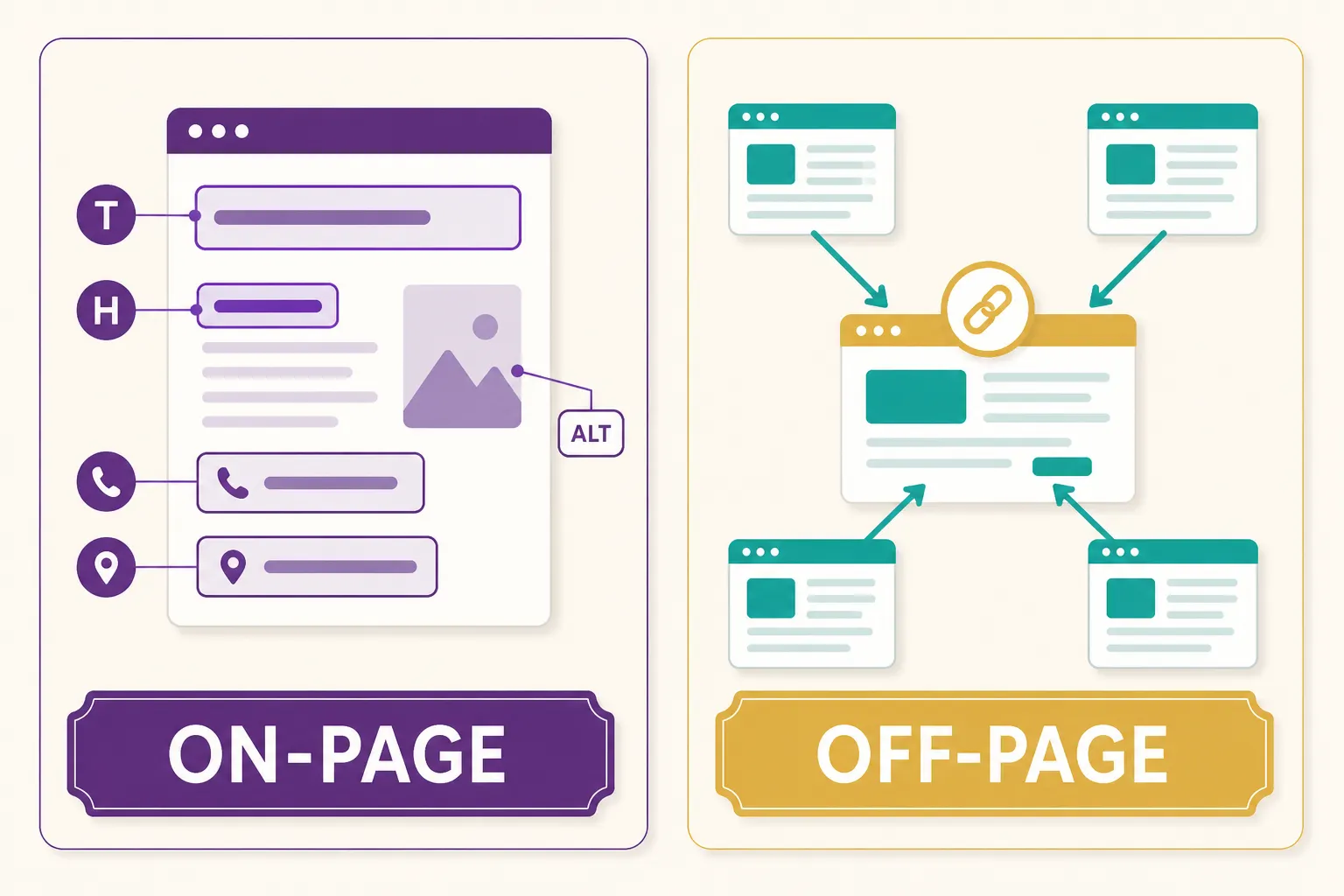
On-page SEO
“On-page SEO” means optimizing all of the content on a page. It includes text, but also image descriptions, page titles, and headings, as well as the phrasing.
Google understands that you are not actually looking for the word electrician, but rather, are looking for an electrician, in a specific location, that you can call to repair a broken circuit or install a new chandelier. So, Google is looking for words or phrases that make your site more relevant like “same day repairs” or “lighting installations.” They are also looking for a web page that has a location, a phone number, and maybe a paragraph about what to do if a circuit breaker trips.
Factor 2
Off-page SEO
“Off-page SEO” is reliant on the other websites that refer to yours. These are called “back-links,” and are the links that direct viewers to your site.
Both on-page and off-page SEO are important to landing on the first page of search results and they should be the focus of any SEO services.
Summary of basic SEO
Search engines don’t just look for words on a page. They analyze all of the content and make judgments about the site based on their algorithms. They also look at how many other sites are linking to yours as providing helpful information.
If SEO is done correctly, there should be an increase in the three key performance metrics, month after month, which usually means getting more customers.
The SEO process that we use will also put you at a higher ranking in the Google My Business (GMB) section of results.
Local SEO and Google Business Profile
If your customers are in a city, not “the whole internet,” website search optimisation also means local SEO. Google often shows a map pack of three businesses above the regular results. Your Google Business Profile (name, address, phone, categories, photos, hours, and reviews) is how you compete for those spots.
Local SEO and classic organic SEO are one program for a Fraser Valley business: the map for nearby searches, the regular results for everything else. That is the same split we use on city pages such as Abbotsford SEO.
Technical SEO in plain language
Google has to find the page, understand it, and load it fast enough that people stay. That is technical SEO: crawlability, indexation, mobile layout, and page speed. A brilliant service page that never gets into the index cannot rank.
Crawl budget matters more on large sites, but every business site should still drop broken links, thin tag pages, and redirect chains that waste the crawl.
How to tell if website search optimisation is working
Rankings without leads are a vanity report. Watch three layers:
- Visibility: which searches show your pages, including the map pack.
- Traffic: visits from those searches, not from branded people who already know you.
- Customers: calls, forms, and booked jobs that came from organic search.
User engagement metrics (time on page, pages per visit, and whether someone bounced straight back to the search engine results page) tell you if the landing page matched the query. They do not replace a lead count.
When to do it yourself and when to hire
You can fix titles, write clearer service pages, and claim your Google profile without an agency. Competitive local searches, link building, and a messy technical site usually need a specialist. How to choose an SEO company and the SEO buyer guide cover proof, contracts, and what “month to month” should mean.
IIAS has done this work from Abbotsford since 1995. If you want the service, not just the lesson, see our search engine optimization page or request a free growth review.
Tools to help you analyze your website’s SEO
If you want to try some of the tools that are used for SEO, start with these. Tools report data. They do not pick the keyword, write the page, or earn the link: